The data existed. The answers did not.
A shared mobile tower carries several operators off one DC power plant, and every one of them has to be billed for the energy it actually drew. Galler’s meters produce those readings. Sedawk built the console that makes eleven thousand of them answerable.
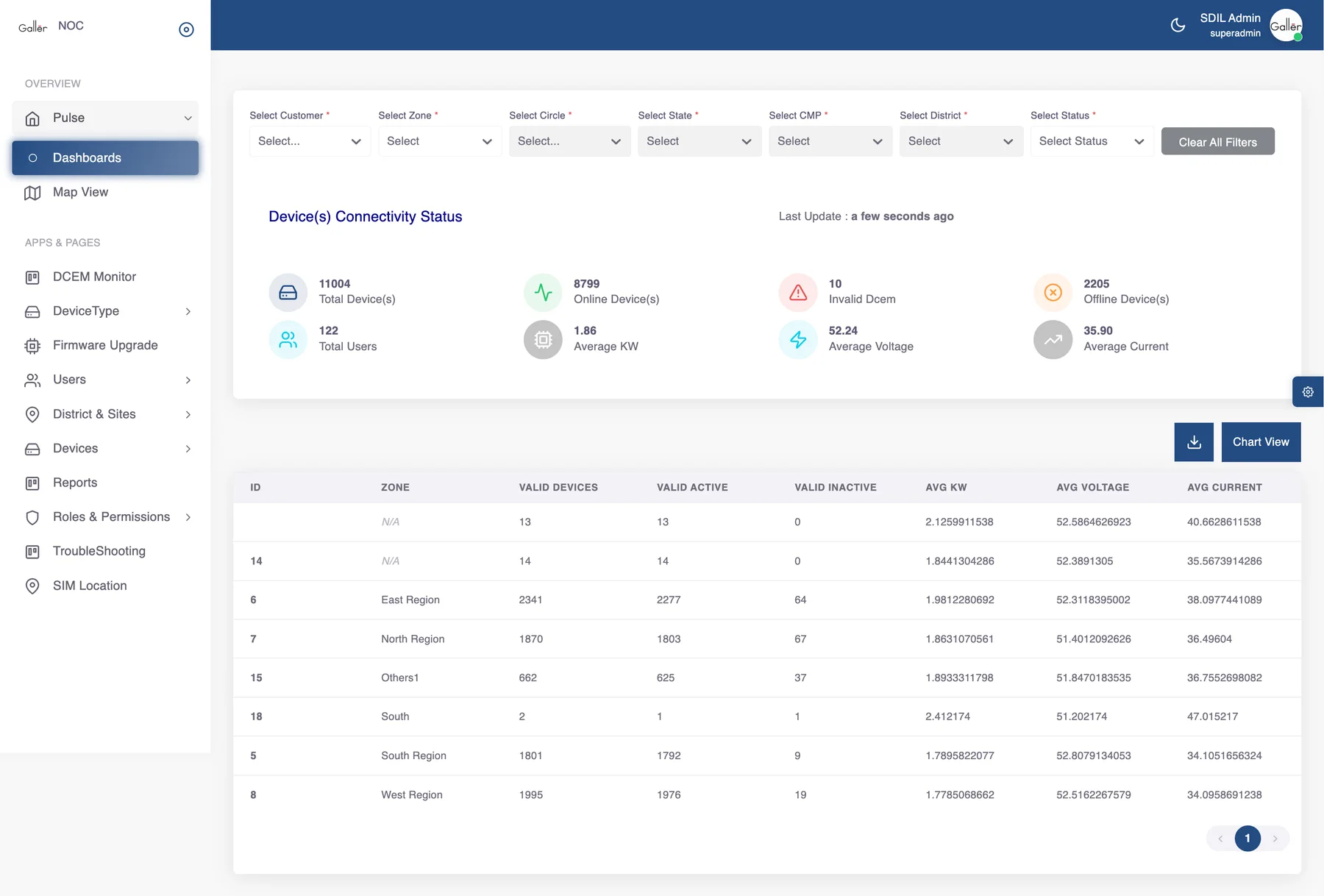
The screen that answers the only urgent question
Is the fleet up? Eight tiles answer it before anything else loads — 11,004 meters, 8,799 reporting, 2,205 dark. The averages beside them say whether the ones reporting are reporting sensibly.
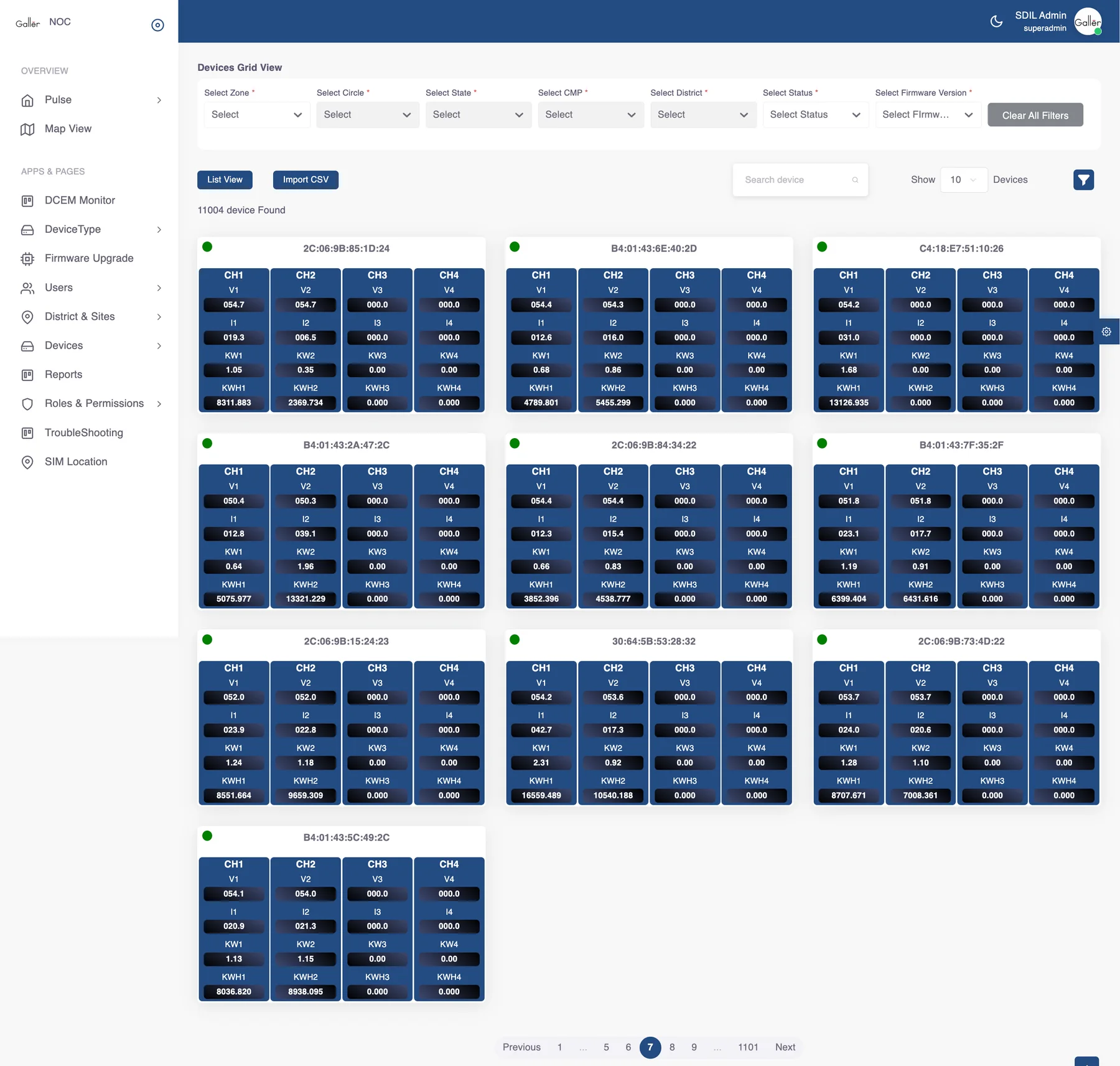
Four channels, on the face of the card
A list would mean opening every meter to find out whether it is healthy. The grid puts all four metered channels on the card — voltage, current, load and cumulative energy — so a dead channel or a collapsed bus is visible while scrolling.
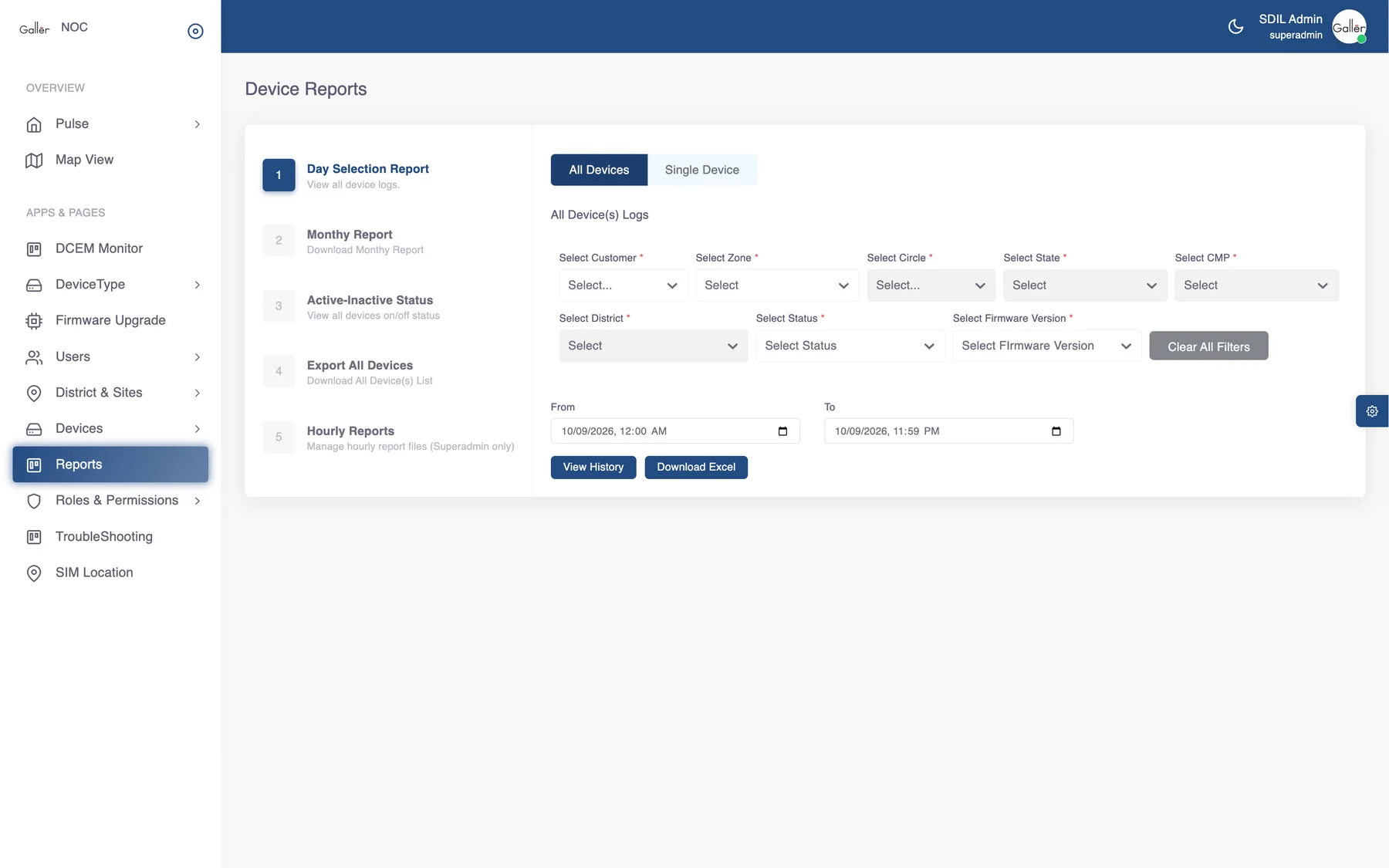
Five ways out, and a file at the end of each
A NOC screen is never the last stop — the numbers get reconciled and signed off somewhere else. Reports are a numbered stack rather than a dropdown, because picking the wrong one costs a download of eleven thousand rows.
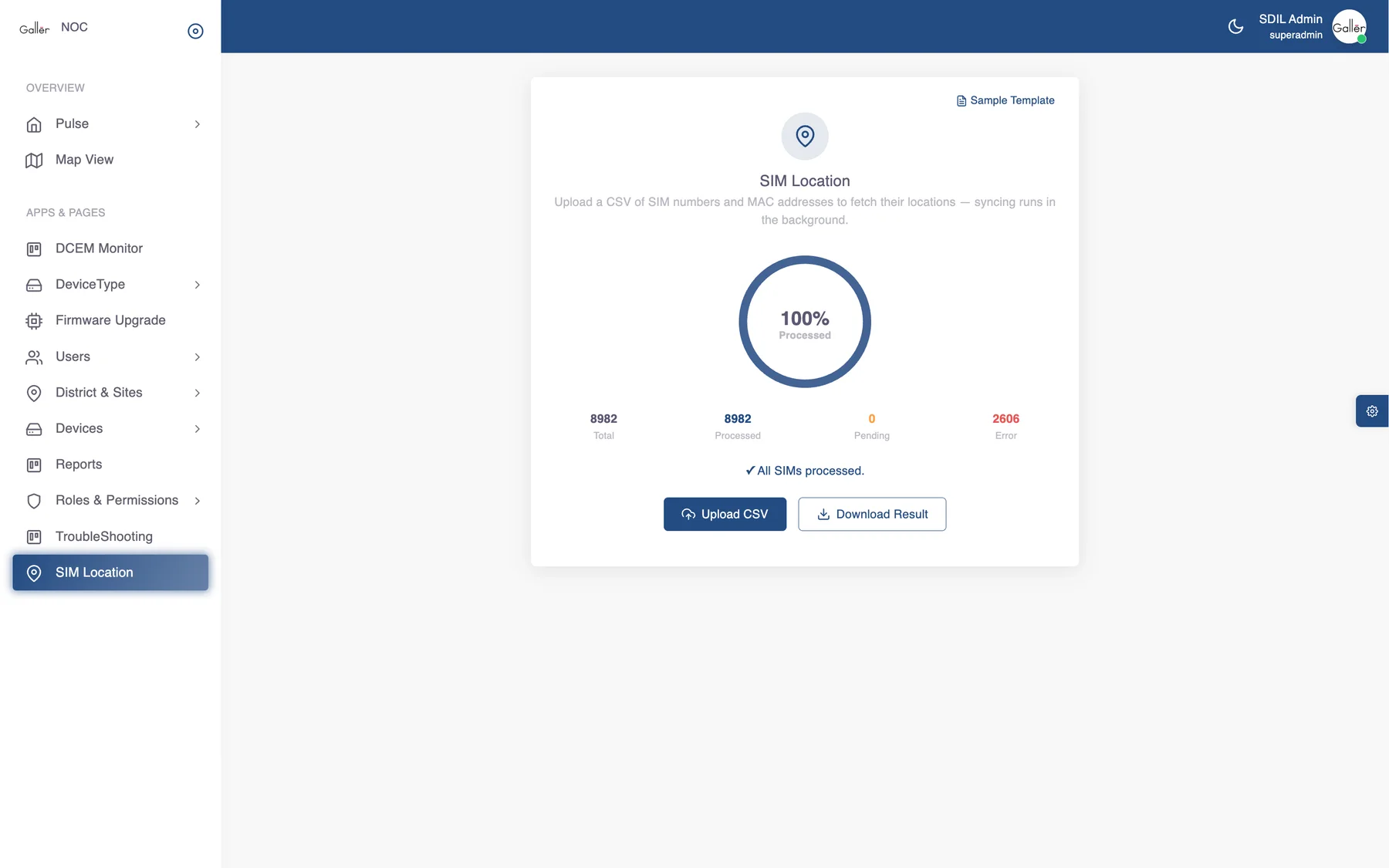
A batch job that admits what failed
Locating nine thousand SIMs is a batch, not a request. The CSV is accepted, the operator is released, and the sync runs in the background against a live processed count.
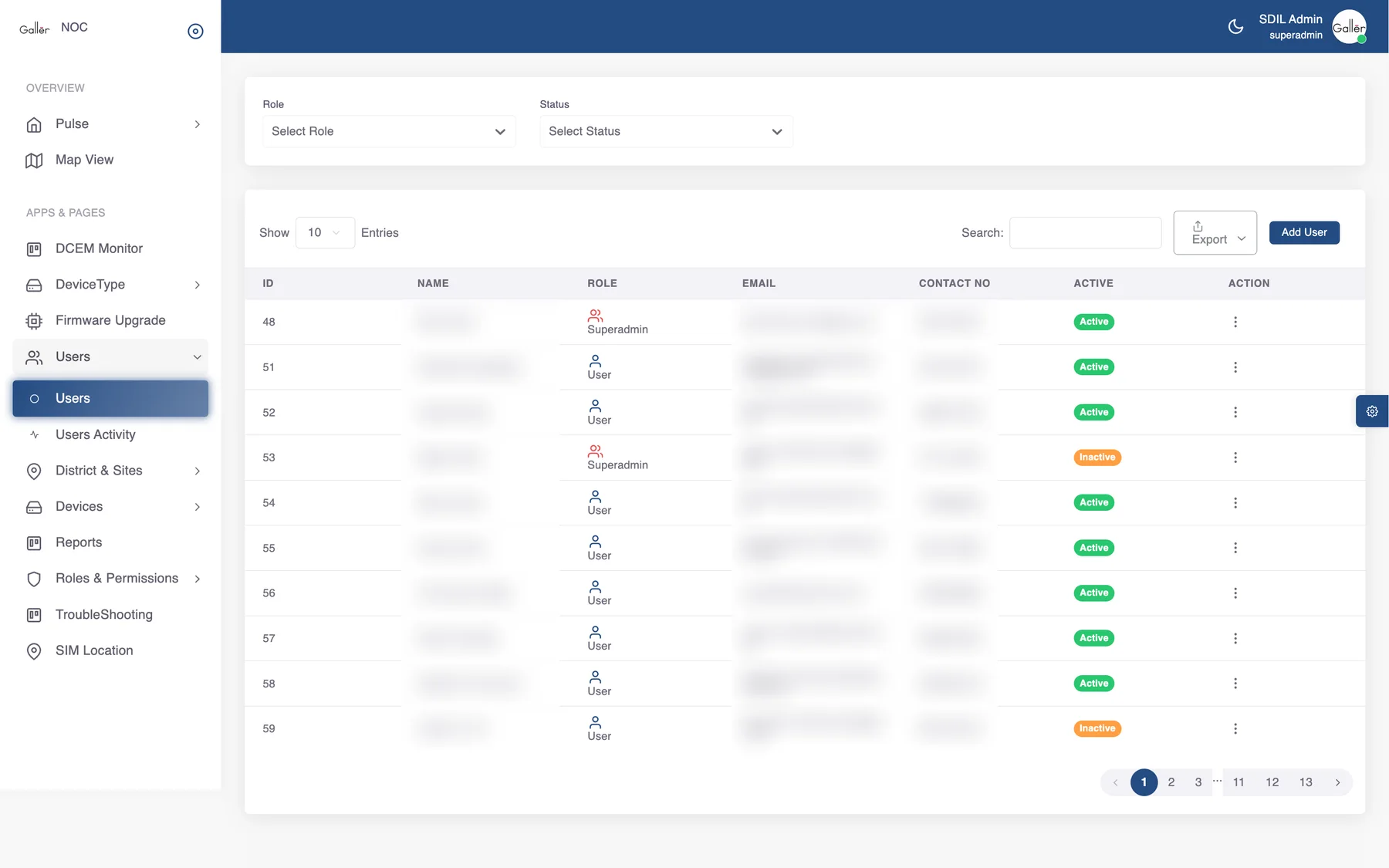
A hundred and twenty-two accounts, two levels of reach
A platform that can push firmware to eleven thousand meters cannot hand every account the same controls. Roles carry through the console, and a separate activity view makes access itself reviewable.
The fleet, as the console reports it
Figures from a single capture of the production console, not a projection. The interesting one is 2,205 offline — a number that was not knowable in an afternoon before this platform existed, let alone at a glance.